


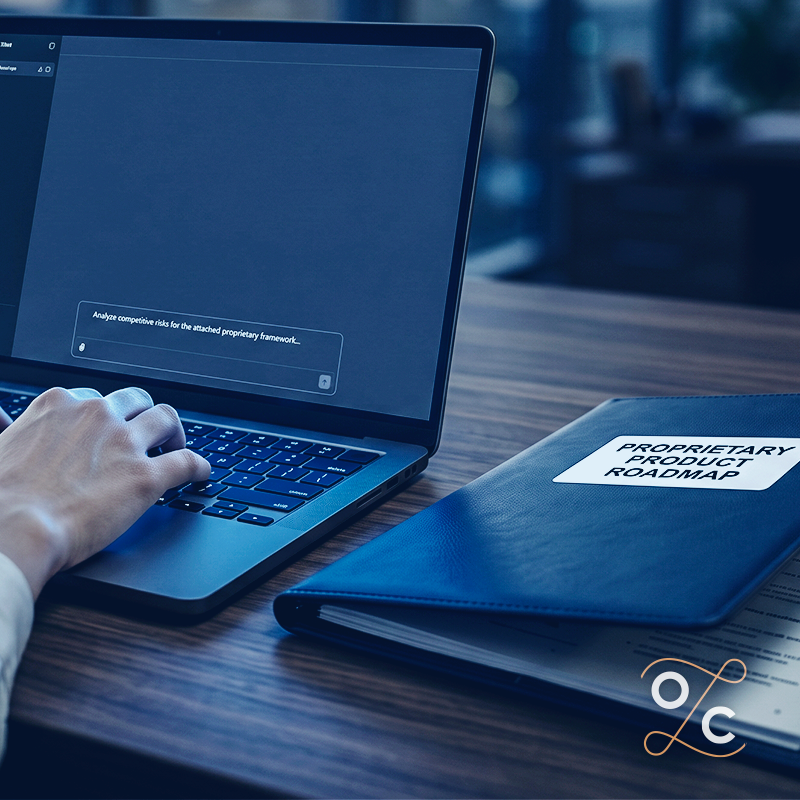
Artificial intelligence is creating a new challenge for employers seeking to protect confidential information and trade secrets. Traditionally, when an employee improperly took company information, employers could often identify evidence such as downloaded files, forwarded emails, USB transfers, or documents saved to personal devices. AI may make that evidence trail far less obvious.
As discussed in a recent Legal Intelligencer article, employees increasingly interact with AI tools throughout their workday. Over time, an AI system may accumulate context about a company's strategies, processes, customers, pricing, products, or other sensitive information—even where an employee never downloads or copies a particular confidential document.
This creates a significant issue when an employee leaves for a competitor. An employer investigating potential trade secret misappropriation may traditionally search the employee's computer, email, cloud storage, or download history. But if confidential knowledge has been repeatedly entered into or developed through an AI platform, there may be no obvious file transfer to identify.
For employers, the issue is especially important because trade secret protection generally depends in part on whether the company took reasonable measures to protect the secrecy of its information. AI governance should therefore increasingly be viewed as part of an organization's broader information-security and trade-secret strategy.
Employers should consider:
The broader takeaway is that protecting trade secrets can no longer focus solely on preventing employees from taking documents. Employers should consider how sensitive information is being used within AI systems and whether existing policies, technical controls, and offboarding procedures adequately address this emerging risk.
As AI becomes integrated into everyday business operations, employers that establish clear AI governance policies now will be better positioned both to protect confidential information and to demonstrate that they took reasonable steps to safeguard their trade secrets.
Outside Legal Counsel LLP advises employers, executives, and boards on workplace AI policies, confidentiality and trade secret protections, restrictive covenants, employment agreements, employee departures, and strategies to minimize employment-related risk. Contact us today.
This newsletter is for informational purposes only, is not legal advice, and may be considered attorney advertising.
#ArtificialIntelligence #TradeSecrets #AIGovernance #EmploymentLaw #Confidentiality #RiskManagement
Disclaimer: Nothing on this website is or should be construed as legal advice. An attorney-client relationship does not exist with our firm unless a signed retainer agreement is executed, and we do not offer legal advice through this site or any of the content located on it. For legal advice for your particular circumstances, please contact us directly.
