


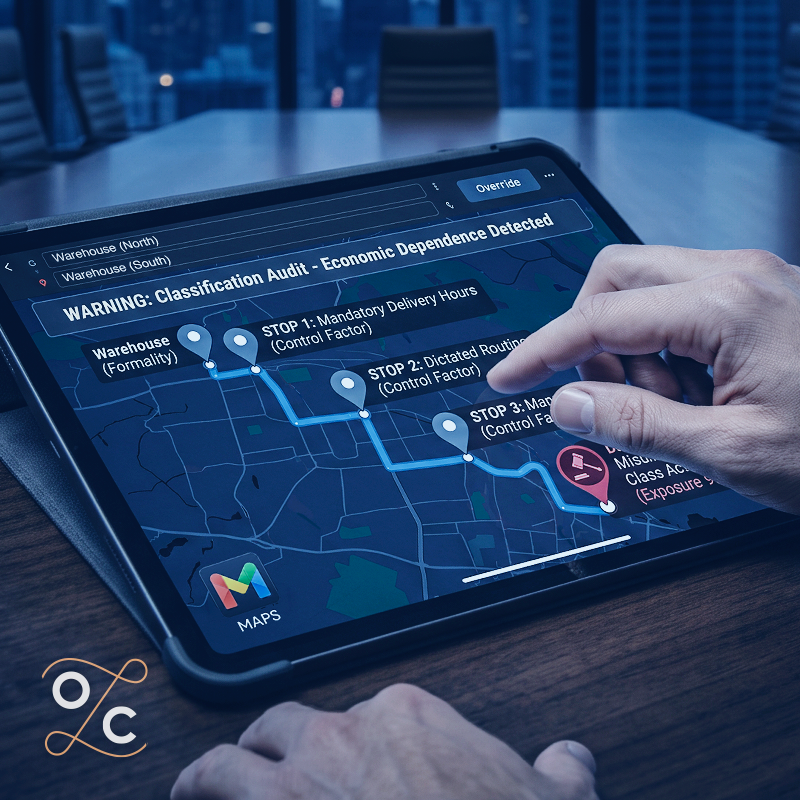
Worker classification remains one of the most heavily litigated issues facing businesses today. While many employers focus on whether an individual is labeled an independent contractor or an employee, courts increasingly look beyond contractual language and examine the realities of the working relationship. A recently filed wage and hour lawsuit involving drivers providing services through Google Maps illustrates how misclassification claims continue to evolve as technology companies expand their use of platform-based workforces.
According to reports, the plaintiffs allege they were improperly classified as independent contractors despite performing work under conditions that they contend reflected an employment relationship. The lawsuit seeks recovery of unpaid wages, overtime compensation, reimbursement of business expenses, and other damages available under applicable wage and hour laws. Although the allegations remain unproven, the case reflects the growing willingness of workers to challenge classification decisions involving technology-driven business models.
For employers, the case serves as an important reminder that worker classification depends on substance, not titles or written agreements. Simply referring to an individual as an “independent contractor” does not determine legal status. Federal and state agencies, as well as courts, evaluate numerous factors to determine whether a worker is economically independent or is, in reality, functioning as an employee.
Employers utilizing independent contractors should periodically evaluate whether the relationship reflects legitimate contractor status by considering factors such as:
One of the greatest risks associated with misclassification is that liability often extends well beyond unpaid wages. Employers found to have misclassified workers may face claims for unpaid overtime, minimum wages, meal and rest period violations (where applicable), unreimbursed business expenses, payroll taxes, unemployment insurance contributions, workers' compensation premiums, employee benefits, statutory penalties, interest, and attorneys' fees. In many cases, these claims are brought as class or collective actions, significantly increasing potential exposure.
Technology platforms have added another layer of complexity to worker classification. Digital applications can monitor productivity, assign work, establish performance standards, control compensation, and evaluate workers through algorithms. While these tools improve operational efficiency, they may also provide evidence regarding the degree of control exercised over workers, one of the central issues courts often consider when evaluating classification disputes.
The broader takeaway is that worker classification should not be viewed as a one-time decision made when a contract is signed. As business relationships evolve, the actual working arrangement may change in ways that increase legal risk. Employers should periodically audit their independent contractor relationships, review agreements and operational practices, and ensure that both align with applicable federal and state law. A proactive review today may prevent significant wage and hour liability tomorrow.

Outside Legal Counsel LLP advises employers, executives, and boards on wage and hour compliance, independent contractor classification, workforce audits, employment agreements, and strategies to minimize labor and employment litigation risk. Contact us today.
This newsletter is for informational purposes only, is not legal advice, and may be considered attorney advertising.
#EmploymentLaw #WorkerMisclassification #IndependentContractors #WageAndHour #GigEconomy #HRCompliance
Disclaimer: Nothing on this website is or should be construed as legal advice. An attorney-client relationship does not exist with our firm unless a signed retainer agreement is executed, and we do not offer legal advice through this site or any of the content located on it. For legal advice for your particular circumstances, please contact us directly.
