


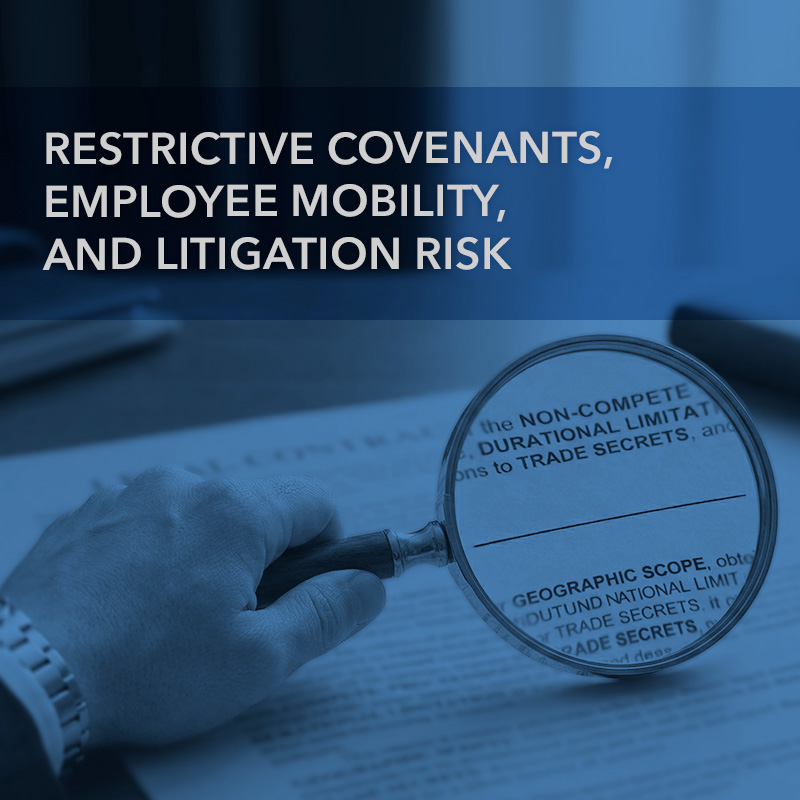
An article published in American Bar Association Business Law Today, “Recent Developments in Employee Mobility, Restrictive Covenants, and Trade Secrets,” examines the rapidly shifting legal landscape governing non-competes, non-solicitation agreements, and trade-secret enforcement. The ABA analysis highlights that employee mobility is increasingly favored by regulators and courts, placing traditional restrictive-covenant strategies under heightened scrutiny.
According to the article, federal and state enforcement trends—along with divergent judicial standards—have made restrictive covenants more difficult to enforce, particularly where agreements are overly broad, poorly tailored to legitimate business interests, or inconsistently applied. At the same time, courts continue to protect narrowly drafted covenants tied to bona fide trade-secret protection, confidential information, and customer goodwill, reinforcing the importance of precision in drafting and enforcement.
While public attention often focuses on headline bans or regulatory proposals, the ABA underscores broader governance and compliance risks for employers. Overreliance on legacy noncompete templates can expose companies to litigation, regulatory inquiry, and reputational harm, while aggressive enforcement actions may trigger counterclaims, whistleblower allegations, or scrutiny under unfair-competition and antitrust theories.
From a legal and risk-management perspective, restrictive covenants now sit at the intersection of employment law, trade-secret protection, and corporate governance. Internal communications regarding enforcement decisions, selective application of restrictions, and exit-interview practices frequently become central evidence in mobility disputes. Employers must also balance protecting proprietary assets against evolving public policy favoring worker movement and competition.
The takeaway is that restrictive covenants remain viable—but only when deployed strategically. Agreements must be jurisdiction-specific, narrowly scoped, and integrated into a broader compliance framework that includes confidentiality controls, trade-secret hygiene, and thoughtful offboarding practices.

Outside Legal Counsel LLP advises employers, employees, and boards on restrictive-covenant strategy, employee-mobility compliance, trade-secret protection, and litigation risk management in an evolving regulatory environment. Contact us today.
This is not legal advice and is attorney advertising.
#EmploymentLaw #NonCompete #TradeSecrets #EmployeeMobility #LitigationRisk #CorporateGovernance
Disclaimer: Nothing on this website is or should be construed as legal advice. An attorney-client relationship does not exist with our firm unless a signed retainer agreement is executed, and we do not offer legal advice through this site or any of the content located on it. For legal advice for your particular circumstances, please contact us directly.
